Normally I would also consider a ground problem, but not so much in this case. Since all the brake lamps don't work, it's unlikely. There are two different grounds, each on opposite sides of the body. To have two that are bad in very different locations, in the same circuit, is a remote possibility. If one was bad, the left brake lamp (grounded through SP402) or the right lamp and the CHMSL (grounded through SP401) would still work.
The following tests and checks are not a complete check of the wiring and are based ON YOUR SPECIFIC PROBLEM. This being that all the brake lamps are out, including the CHMSL. If only some didn't work, there would be additional/different steps to follow.
CHECK #1:
I don't want to seem like I'm also harping on the fuse issue, but... Generally, when people say they've checked 'ALL' the fuses, it's a strong indicator they really aren't sure which one they're looking for. To quickly check all of them increases the likelihood of missing the right one. It is #19 under the rear seat, labeled "STOP LP" and is 15A. Pull it out, measure it with a meter or swap it with a new one. Sometimes they look good but aren't. You can also measure voltage from ground to both the small exposed metal tabs on top of the fuse for power. In this circuit, there should be power on both sides of the fuse at all times if it's good (whether the ignition is on or not).
CHECK #2:
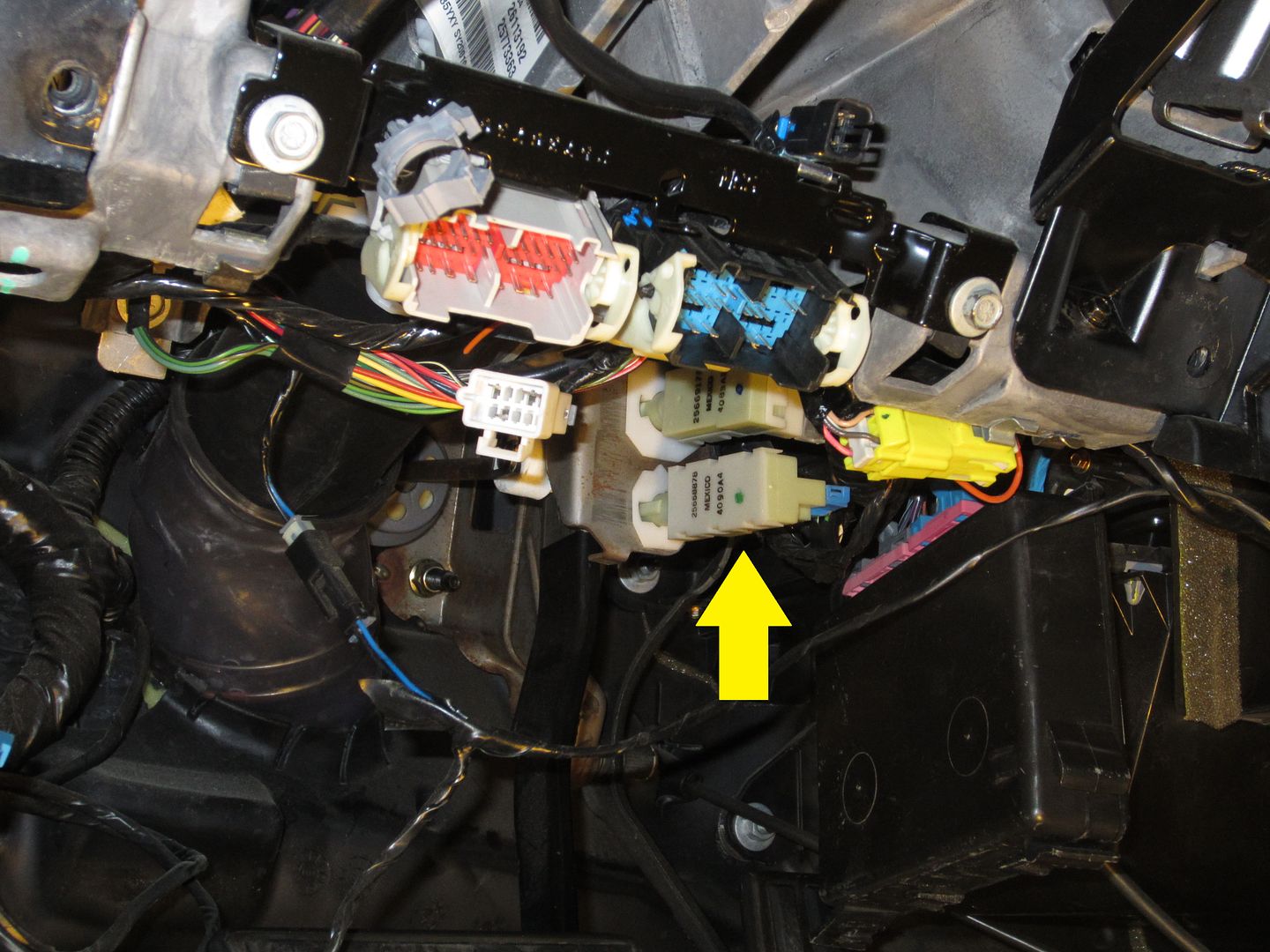
Are you certain that you replaced the correct switch under the dash (identified by the yellow arrow in the photo below)? There is normally two switches, both very similar. The one that controls the brake lights has two connectors and is the lower one, closest to the brake pedal. One is a 2-Cavity GRAY connector and the other is a 4-Cavity BLUE connector. The 2-Cavity GRAY connector is for the brake lamp circuit and will have two wires (ORANGE and WHITE). If you use a test light or a multimeter, the ORANGE wire will always have power and the WHITE wire will only have power when the brake pedal is pressed. If you do not have constant power on the ORANGE wire, there is a problem with the fuse or the wiring from the rear fuse block to the brake pedal switch. If you have constant power on the ORANGE wire, but no power on the WHITE wire when the brake pedal is pressed, the fault is in the brake switch. If these checks are successful, the problem is between the brake pedal switch and the brake lamps.
CHECK #3:
If you have power on the WHITE wire of the brake pedal switch when the brake pedal is pressed, my bet is that you have a wiring corrosion problem at splice pack SP304. This is located in the floor pan to the left of the driver's seat. A splice pack is a connector where numerous wires connect for the purpose of joining them together. It is really just a fancy way of crimping a bunch of wires together. As you may already know, the Bonneville is notorious for water leaks, especially water in the floor pan (from a number of potential sources). Checking SP304 requires removal of the driver's seat and lifting the carpet out of the way to access the main body wiring harness. SP304 will be completely or partially wrapped in black tape attaching it to the main body wiring harness. You will need to carefully cut away some of the tape to access it. You'll know where it is because you'll see a rectangular object in an otherwise straight, round wiring harness. If you nick any of the wires accessing this, you may have future corrosion problems if not properly repaired.
I should add that THIS particular splice pack joins wires into two separate groups. If you find corrosion, do not simply cut all the wires and join them together. This will create new problems.
Post back with your findings and we can determine what the next step may be.
