2000+ Coilover Discussion Thread
Posted: Wed Feb 20, 2013 7:23 pm
Taken from: http://www.pontiacbonnevilleclub.com/fo ... 37469.html
Two major types of coilovers
The better and more complicated option allows for separate adjustment of spring pre-load and ride height. The strut cartridge is threaded through the lower mount that bolts to the knuckle.

The easier option is to take an existing strut, cut off the OEM spring perch, slide on a threaded sleeve, spring perch
and spring. Height adjustment is dependent on spring pre-load. Threading the spring perch up, pre-loading the spring into the top mount, will give you a high ride height while completely unloading the spring will give you a lower height.

The second option is what you'll find in DIY coilover threads and will be the main focus of this discussion.
Lets start with the strut since you'll be building the coilover based on it.
Strut Options
Bolt on performance strut options for the 2000+ H:
FE5 GXP
??
??
Struts that will bolt to the front 2000+ knuckle:
Above
Any 97+ W-body strut
-KYB AGX
-04+ Comp G and GXP (Bilstein) p/ns can be found here.
-Discontinued GMPP Konis
Other option with strut:
Cut an OEM strut open, measure, contact Koni to find an insert that will fit and be valved correctly.
See this guide for doing this to a 97-03 GP.
Next hurdle: Strut shaft size
This is one of two unknowns for you 2000+ guys.
The 97+ GP strut shaft overall and threaded diameter will more than likely be smaller than stock and you're going to have to accommodate for that. This was the case for my 92-99 coilover. The GP's threaded shaft is 14mm in OD, 1.7mm smaller than a 92-99. So, I added a dome shaped washer, bored it out slightly and added a small sleeve on top to center it in my top mount.
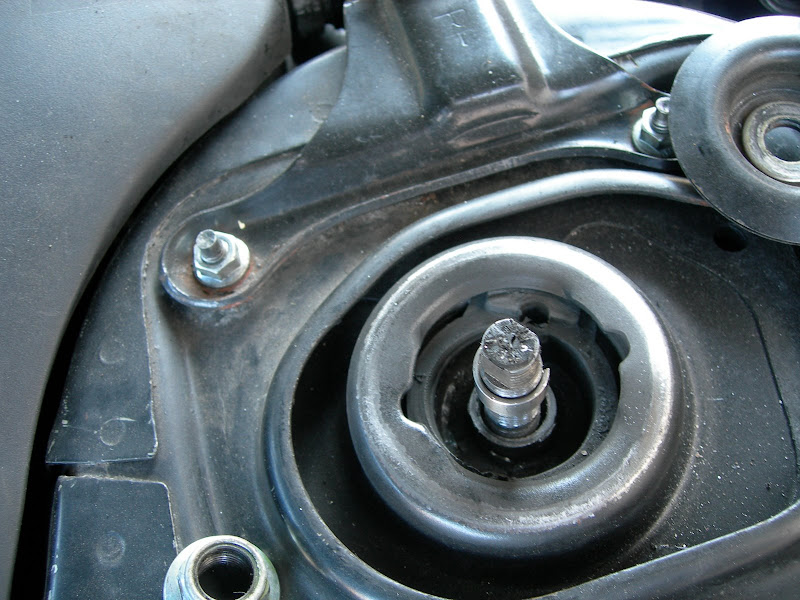
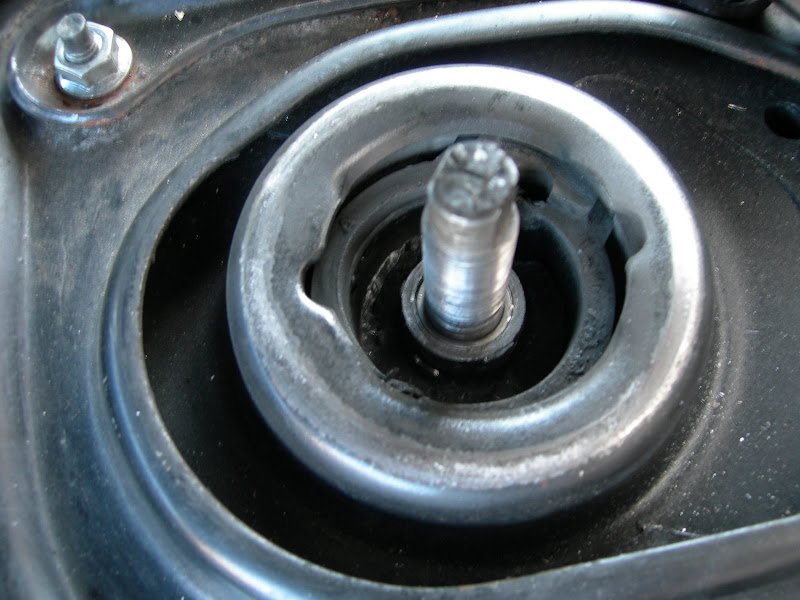
I'm sure similar needs to be done and all you may need is a different sleeve.
Springs and Sleeves
Ground Control makes spring/sleeve kits for various other platforms but spring/sleeve options are readily available from from Summit, Jegs, Speedway, A1Racing, etc. Getting the right sleeve/perch depends on the strut size.
I bought my 400lb 10x2.5" springs from Summit (HAL-10-400), and also the 2.5" roller bearings (HAL-7888-109) that sit under the spring and on top. And I got the 2.5" sleeve and perch (also called nut) from A1Racing.
From the GP world, 10" seems to be the best spring length. At 12", the spring can bow into the strut body.
You'll want a 350-450lb spring rate. 400 on my 95 is perfect. Not too rough but performs well.
Regardless of what strut you choose, you'll need to cut the spring perch off the strut and CAREFULLY grinding it's weld down. Do not let any area get hot or grind it down too far.


2000+ FE5 Strut or similar:
You'll need to measure the OD of your strut body and find a sleeve and perch that will work with it. Then you'll need whatever spring works with that perch.
For 97+ GP Struts:
GMPP Koni and AGX 97-03 will require a 2.175" ID sleeve.
GXP Bilsteins have a smaller shaft body and require a 2.07" ID sleeve.
**The GXP Bilsteins also have a taller strut body which won't allow for as much as a drop before bottoming out the strut**
For any other strut, you're on your own for measurements.
OEM+Koni:
Same as 2000+ FE5 Strut or similar
Last hurdle: Top Mount
This is 2 of 2 unknowns for you 2000+ guys
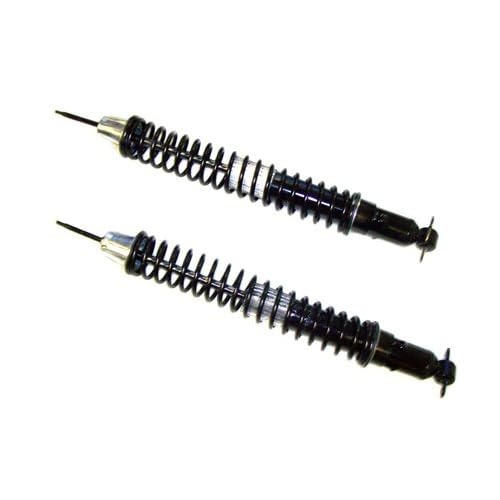
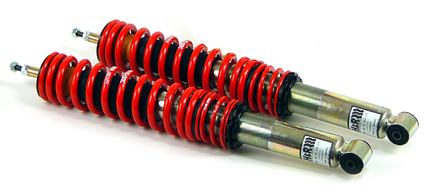
Most DIY coilover solutions don't go as far as making pillow ball mounts and camber plates as shown in the coilover type pictures above. The bearings used in pillow ball mounts are loaded incorrectly anyway but I won't get into that.
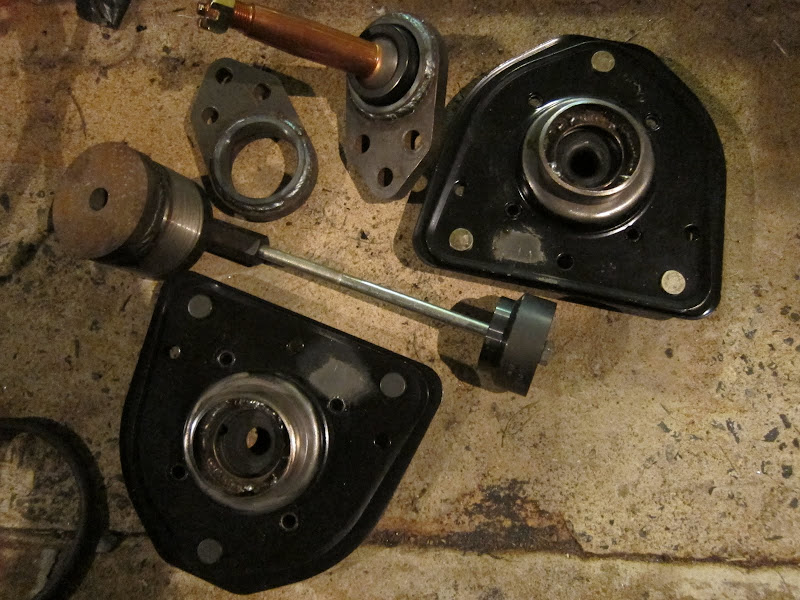
Most, like myself, modify the stock top mount to accommodate the new spring. I don't know what your top mount looks like or what you'll have to do but all I did was weld a piece of tubing to mine to center the spring. I used a pipe cutter which shrank the tubing enough in the area where it meets the top mount that the bearings I used became a press fit. If they weren't a press fit, they would need to be re-aligned every time you jacked the car up. Springs top and bottom are best but only bottom will work fine provided you keep them greased.
Adapted top mount with bearing:
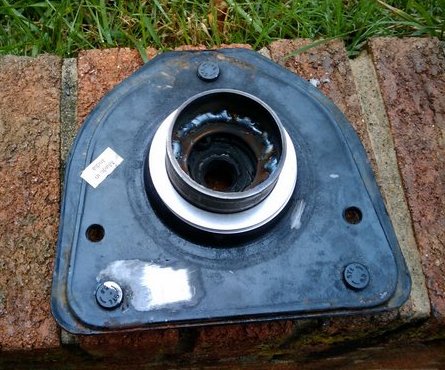
And finally what it'll look like all together:
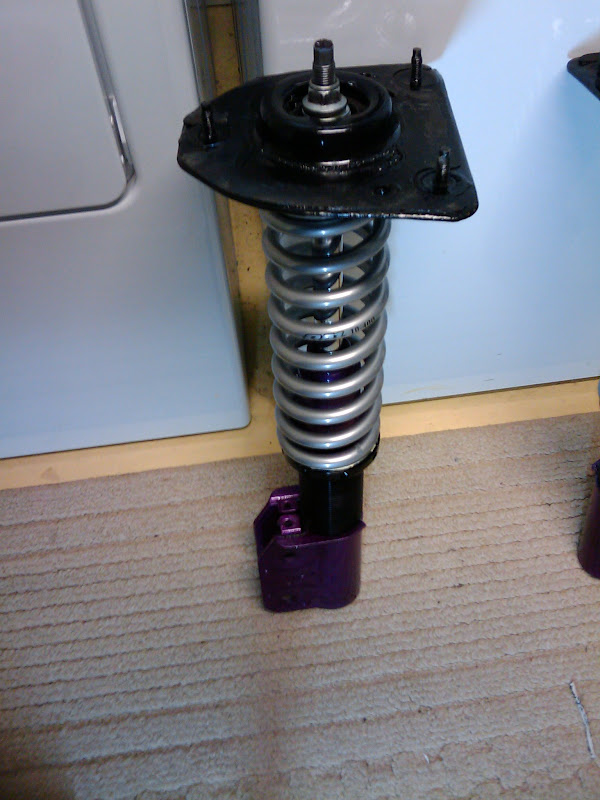

As mentioned earlier, ride height is dependent on spring preload. In those last pics the spring is barely loaded. My actual ride height has the perch screwed all the way down to about an inch from the bottom of the sleeve. This means that when I jack up the car there is a gap between the top of my spring and the top mount.
Similar to this:

This means you have to make sure the spring gets guided into the top mount when you lower the car down from a jack. On my 95, when I upgraded to a FE2 front sway, the spring would stay seated if the other front wheel was on the ground.
They do make helper springs for this. I just never bothered.

Hopefully all of that makes sense and puts things into perspective.
Summary of the differences between the options
For a 2000+ FE5 or similar strut:
-No issue with strut shaft through stock top mount
-Need to center spring on the stock top mount somehow
-Measure the strut body OD
-Find/buy the right spring/sleeve/perch
For a 97+ W-body AGX, GMPP Koni, or GXP Bilstein
-Need to find shim for where strut shaft goes through stock top mount in conjunction with dome washer I listed
-Need to center spring on stock top mount somewhow
-Spring/sleeve/perch p/ns are listed or linked above
For Koni inserted into stock strut:
-No issue with strut shaft through stock top mount
-Need to center spring on the stock top mount somehow
-Measure the strut body ID and OD
-Find/buy the right spring/sleeve/perch
-Contact Koni to find/buy a strut cartridge that will work
-Modify strut housing
-Shim strut shaft if necessary
OK Soo.. What about the rear??
Since our cars came with air assist rear shocks there is already some level of ride height adjustability.
With a custom lower rear spring slightly lower than where you want your ride height plus that air assist you can be as high or low as you want fairly easily. This also allows you to never worry about bottoming out when there's a lot of junk in the trunk.
Performance strut options matter less in the rear since dampening force required is proportional to the weight it's controlling. Less weight, less dampening.
You could convert your rear shocks to coilovers and get rid of the spring if you wanted to. Pre-97 gen W-body guys do this without issue.
Comments? Questions that google won't find?
I should really specify this is more of a front coilover solution only. The rear is easier to lower and control height through a drop spring and air assist. (more on that later)yourgrandma wrote:How? Short of getting a job at a parts store to measure the lengths of every strut in production to compare against the coilover options, Im finding it pretty tough to find any info at all. Theres also a good reason nobody with a bonneville wants to spend money on suspension. Its probably the same reason they bought a Bonneville: they have no concern for handling.95naSTA wrote: With a couple measurements/research you guys could go Konis, AGXs, Bilsteins, + DIY coilovers but nobody wants to send more than $200 on their 4x4 suspension..
I do want to get it to handle as well as reasonably possible, but I also dont want to ruin the ride. If its going to be a bouncy, rickety oxcart, why not just sell it and buy an actual sportscar(what Im working on).
So, perhaps now that the easy way of lowering these things is out the window and nobody thinks $800 is reasonable for custom springs, we should discuss the coilover option in a more in depth manner. For example, I was never able to figure out how to adapt the top spring pad. How do we find a coilover strut with the right length? Is the bottom mount easily convertable?
Two major types of coilovers
The better and more complicated option allows for separate adjustment of spring pre-load and ride height. The strut cartridge is threaded through the lower mount that bolts to the knuckle.
The easier option is to take an existing strut, cut off the OEM spring perch, slide on a threaded sleeve, spring perch
and spring. Height adjustment is dependent on spring pre-load. Threading the spring perch up, pre-loading the spring into the top mount, will give you a high ride height while completely unloading the spring will give you a lower height.
The second option is what you'll find in DIY coilover threads and will be the main focus of this discussion.
Lets start with the strut since you'll be building the coilover based on it.
Strut Options
Bolt on performance strut options for the 2000+ H:
FE5 GXP
??
??
Struts that will bolt to the front 2000+ knuckle:
Above
Any 97+ W-body strut
-KYB AGX
-04+ Comp G and GXP (Bilstein) p/ns can be found here.
-Discontinued GMPP Konis
Other option with strut:
Cut an OEM strut open, measure, contact Koni to find an insert that will fit and be valved correctly.
See this guide for doing this to a 97-03 GP.
Next hurdle: Strut shaft size
This is one of two unknowns for you 2000+ guys.
The 97+ GP strut shaft overall and threaded diameter will more than likely be smaller than stock and you're going to have to accommodate for that. This was the case for my 92-99 coilover. The GP's threaded shaft is 14mm in OD, 1.7mm smaller than a 92-99. So, I added a dome shaped washer, bored it out slightly and added a small sleeve on top to center it in my top mount.
I'm sure similar needs to be done and all you may need is a different sleeve.
Springs and Sleeves
Ground Control makes spring/sleeve kits for various other platforms but spring/sleeve options are readily available from from Summit, Jegs, Speedway, A1Racing, etc. Getting the right sleeve/perch depends on the strut size.
I bought my 400lb 10x2.5" springs from Summit (HAL-10-400), and also the 2.5" roller bearings (HAL-7888-109) that sit under the spring and on top. And I got the 2.5" sleeve and perch (also called nut) from A1Racing.
From the GP world, 10" seems to be the best spring length. At 12", the spring can bow into the strut body.
You'll want a 350-450lb spring rate. 400 on my 95 is perfect. Not too rough but performs well.
Regardless of what strut you choose, you'll need to cut the spring perch off the strut and CAREFULLY grinding it's weld down. Do not let any area get hot or grind it down too far.
2000+ FE5 Strut or similar:
You'll need to measure the OD of your strut body and find a sleeve and perch that will work with it. Then you'll need whatever spring works with that perch.
For 97+ GP Struts:
GMPP Koni and AGX 97-03 will require a 2.175" ID sleeve.
GXP Bilsteins have a smaller shaft body and require a 2.07" ID sleeve.
**The GXP Bilsteins also have a taller strut body which won't allow for as much as a drop before bottoming out the strut**
For any other strut, you're on your own for measurements.
OEM+Koni:
Same as 2000+ FE5 Strut or similar
Last hurdle: Top Mount
This is 2 of 2 unknowns for you 2000+ guys
Most DIY coilover solutions don't go as far as making pillow ball mounts and camber plates as shown in the coilover type pictures above. The bearings used in pillow ball mounts are loaded incorrectly anyway but I won't get into that.
Most, like myself, modify the stock top mount to accommodate the new spring. I don't know what your top mount looks like or what you'll have to do but all I did was weld a piece of tubing to mine to center the spring. I used a pipe cutter which shrank the tubing enough in the area where it meets the top mount that the bearings I used became a press fit. If they weren't a press fit, they would need to be re-aligned every time you jacked the car up. Springs top and bottom are best but only bottom will work fine provided you keep them greased.
Adapted top mount with bearing:
And finally what it'll look like all together:
As mentioned earlier, ride height is dependent on spring preload. In those last pics the spring is barely loaded. My actual ride height has the perch screwed all the way down to about an inch from the bottom of the sleeve. This means that when I jack up the car there is a gap between the top of my spring and the top mount.
Similar to this:
This means you have to make sure the spring gets guided into the top mount when you lower the car down from a jack. On my 95, when I upgraded to a FE2 front sway, the spring would stay seated if the other front wheel was on the ground.
They do make helper springs for this. I just never bothered.
Hopefully all of that makes sense and puts things into perspective.
Summary of the differences between the options
For a 2000+ FE5 or similar strut:
-No issue with strut shaft through stock top mount
-Need to center spring on the stock top mount somehow
-Measure the strut body OD
-Find/buy the right spring/sleeve/perch
For a 97+ W-body AGX, GMPP Koni, or GXP Bilstein
-Need to find shim for where strut shaft goes through stock top mount in conjunction with dome washer I listed
-Need to center spring on stock top mount somewhow
-Spring/sleeve/perch p/ns are listed or linked above
For Koni inserted into stock strut:
-No issue with strut shaft through stock top mount
-Need to center spring on the stock top mount somehow
-Measure the strut body ID and OD
-Find/buy the right spring/sleeve/perch
-Contact Koni to find/buy a strut cartridge that will work
-Modify strut housing
-Shim strut shaft if necessary
OK Soo.. What about the rear??
Since our cars came with air assist rear shocks there is already some level of ride height adjustability.
With a custom lower rear spring slightly lower than where you want your ride height plus that air assist you can be as high or low as you want fairly easily. This also allows you to never worry about bottoming out when there's a lot of junk in the trunk.
Performance strut options matter less in the rear since dampening force required is proportional to the weight it's controlling. Less weight, less dampening.
You could convert your rear shocks to coilovers and get rid of the spring if you wanted to. Pre-97 gen W-body guys do this without issue.
Comments? Questions that google won't find?